



Begin of page section:
Page sections:

  • Go to contents (Accesskey 1)
  • Go to position marker (Accesskey 2)
  • Go to main navigation (Accesskey 3)
  • Go to sub navigation (Accesskey 4)
  • Go to additional information (Accesskey 5)
  • Go to page settings (user/language) (Accesskey 8)
  • Go to search (Accesskey 9)

End of this page section. Go to overview of page sections

Begin of page section:
Page settings:

English en
Deutsch de
Search
Login

End of this page section. Go to overview of page sections

Begin of page section:
Search:

Search for details about Uni Graz
Close

End of this page section. Go to overview of page sections


Search

Begin of page section:
Main navigation:

Page navigation:

  • University

    University
    • About the University
    • Organisation
    • Faculties
    • Library
    • Working at University of Graz
    • Campus
    Developing solutions for the world of tomorrow - that is our mission. Our students and our researchers take on the great challenges of society and carry the knowledge out.
  • Research Profile

    Research Profile
    • Our Expertise
    • Research Questions
    • Research Portal
    • Promoting Research
    • Research Transfer
    • Ethics in Research
    • Commission for Scientific Integrity
    Scientific excellence and the courage to break new ground. Research at the University of Graz creates the foundations for making the future worth living.
  • Studies

    Studies
    • Prospective Students
    • Students
    • Welcome Weeks for First Year Students
  • Community

    Community
    • International
    • Location
    • Research and Business
    • Alumni
    The University of Graz is a hub for international research and brings together scientists and business experts. Moreover, it fosters the exchange and cooperation in study and teaching.
Topics
  • Sustainable University
  • Researchers answer
  • Work for us
Close menu

End of this page section. Go to overview of page sections

Begin of page section:
You are here:

University of Graz Multilingualism, Migration and Cultural Transformation Events Cluster Akteur:innen: KI und Mehrsprachigkeit
  • About us
  • Our research
  • Events
  • Contact
  • News

End of this page section. Go to overview of page sections

Begin of page section:
Sub navigation:

  • About us
  • Our research
  • Events
  • Contact
  • News

End of this page section. Go to overview of page sections

AI and multilingualism

Which existing AI tools, methods and pedagogical approaches are already suitable for promoting multilingualism in research and teaching? What new materials, task formats or support services are needed to effectively support lecturers and students in this field? The workshop ‘Taking Multilingualism into Account and Promoting It with AI: Resources, Methods and Tools’ led by Assoc. Prof. Mag. Mag. Dr. phil. Elke Höfler (University of Graz), which took place on 1 December 2025 as part of the research focus on Migration, Multilingualism and Transcultural Transformation.

Following a welcome address by the cluster spokespersons for the priority area’s stakeholders, Assoc. Prof. Mag. Dr. phil. Veronika Mattes and Assoc. Prof. Dr. phil. Anouschka Foltz M.A. M.A., the participants plunged straight into the topic together.  The workshop began with a discussion focusing on previous experiences with artificial intelligence (AI) in the context of learning and teaching. The guiding question was “Quo vadis? – Where are education and multilingualism heading in the age of AI?” Building on this, the participants were given an insight into various AI-based language models such as ChatGPT, Gemini and Perplexity, and discussed their potential, limitations, typical errors and biases. Another key focus was on how to formulate effective questions and tasks for different AI tools. 

In the afternoon, the theoretical knowledge was applied to concrete practical examples. Using multilingual abstracts, synopses and research diaries, participants examined how academic writing takes shape in different languages and how AI can support this process. In addition, AI-supported collections of academic writing aids were presented, compared and evaluated in terms of their educational value. Particular attention was paid to materials and methods that deliberately incorporate multilingualism, such as translanguaging texts—in which several languages are specifically combined—as well as assignment formats designed to promote language reflection in higher education teaching. 
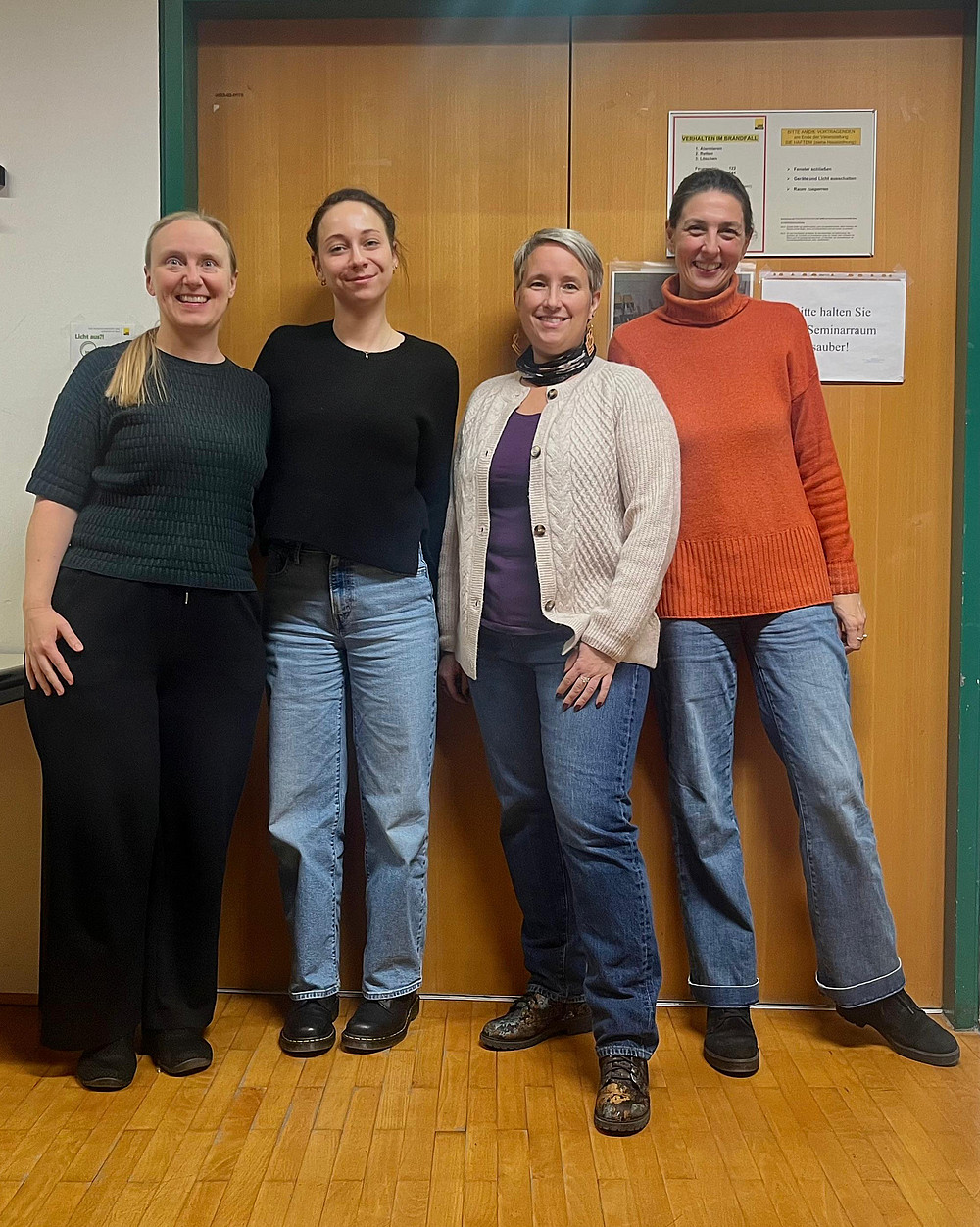
Photo featuring four women ©Katharina Haslacher
©Katharina Haslacher

Begin of page section:
Additional information:

University of Graz
Universitaetsplatz 3
8010 Graz
Austria
  • Contact
  • Web Editors
  • Moodle
  • UNIGRAZonline
  • Imprint
  • Data Protection Declaration
  • Accessibility Declaration
Weatherstation
Uni Graz

End of this page section. Go to overview of page sections

End of this page section. Go to overview of page sections

Begin of page section:

End of this page section. Go to overview of page sections